The colors of the natural world is changing. More than 50% of the ocean has become greener over the last twenty years. Various species of flora and fauna have been changing their colors due to rising temperature, loss of habitats, and pollution. Nature color change is a direct consequence of climate change. Climate change, faster urbanization, air pollution, and industrial pollution are changing color in nature.
The changes echo one during the Industrial Revolution, when engine smoke and soot darkened the barks of trees and rendered the natural camouflage of lighter peppered moths ineffective, leading to the darker peppered moths, which used to be rare, becoming more common.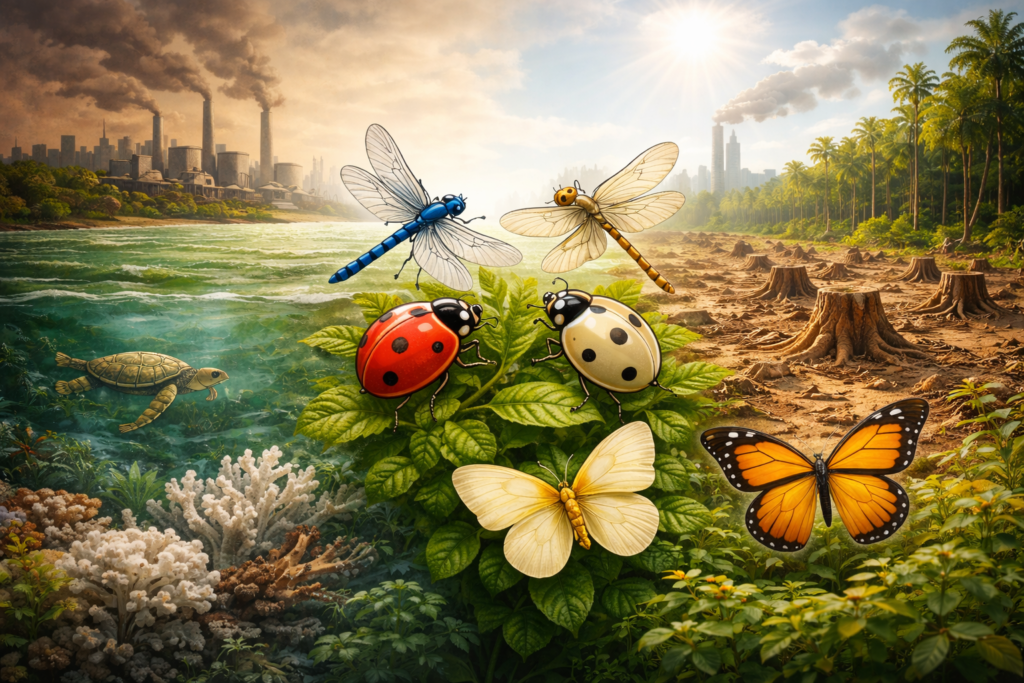
A 2024 study in Ecology and Evolution reported that several insects, including dragonflies and ladybirds, in the temperate northern hemisphere are lighter due to frequent heatwaves.
A study published in Biodiversity and Conservation found that deforestation is causing butterflies to lose their natural and brighter color. A study in the Amazon found that forest areas that had regenerated naturally had a positive effect on the colors of butterfly species.

