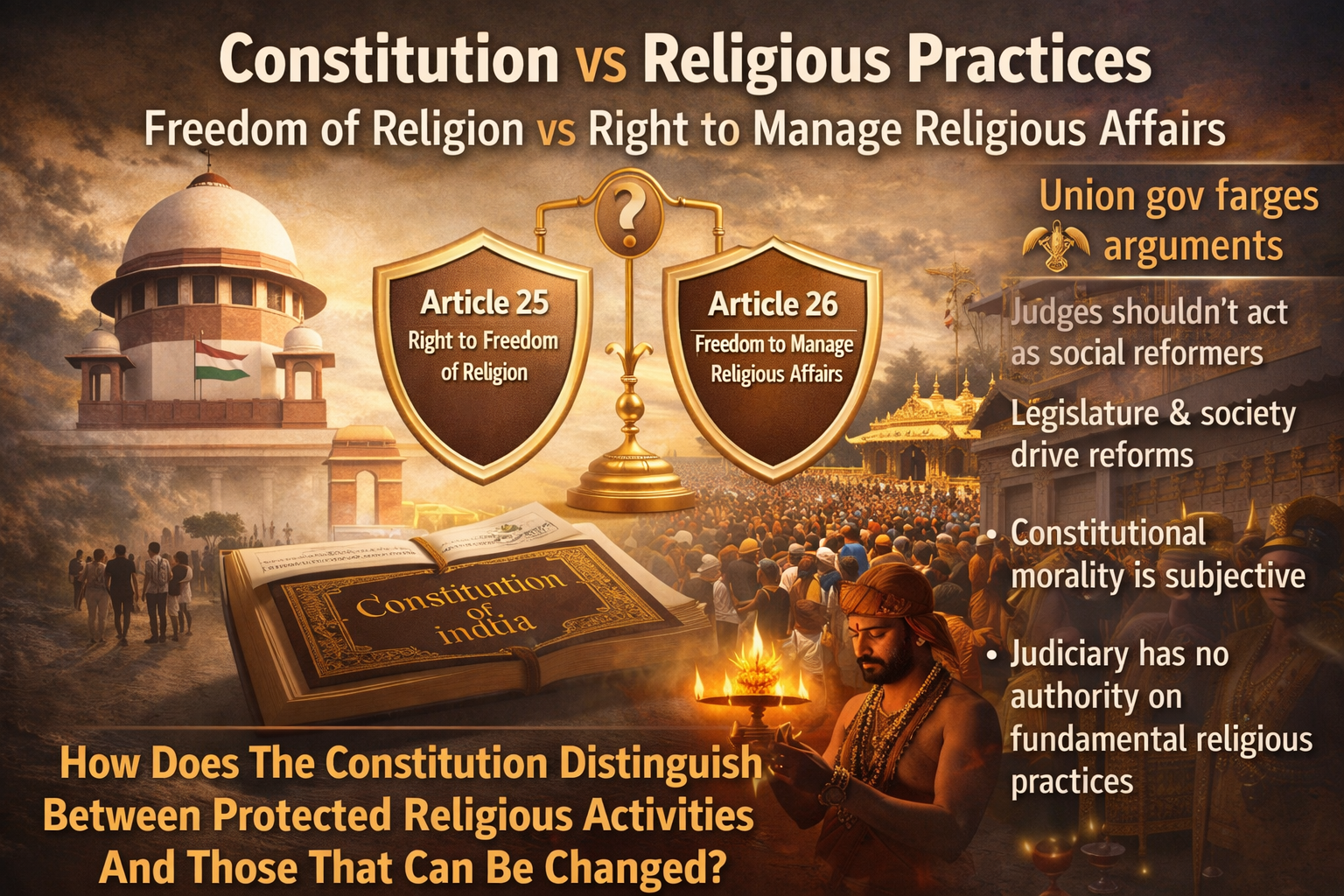
The right to freedom of religion is guaranteed under Articles 25–28 under Part III (Fundamental Rights) of the Constitution; the Sabarimala case concerned how Articles 25 and 26 interact. The Union government contended that judges should not act as social reformers, with reforms coming from the legislature and society, that “constitutional morality” is subjective and not a separate basis for judicial review, and that the judiciary lacks the authority to decide on fundamental religious practices. Fundamentally, the question is how the Constitution makes a distinction between religious activities that are protected and those that can be changed.